
How AI Can Help Network Marketers Work Smarter
AI can help network marketers organize ideas, create content faster, improve communication and build a more efficient daily workflow—without replacing the human relationships that make network marketing meaningful.
Introduction
आज network marketing में growth केवल products या opportunity के बारे में बताने से नहीं होती। एक modern network marketer को content create करना पड़ता है, prospects से conversations maintain करनी पड़ती हैं, follow-up करना पड़ता है, training material समझना पड़ता है, team को support करना पड़ता है और अपने daily activities को consistently organize करना पड़ता है। इन सभी कामों के बीच सबसे बड़ी challenge अक्सर यह होती है कि समय सीमित है, लेकिन expectations लगातार बढ़ रही हैं। यही कारण है कि Artificial Intelligence, या AI, network marketers के लिए एक practical productivity assistant बनकर सामने आया है।
AI का सही उपयोग करने का मतलब यह नहीं है कि अब आपको हर काम machine को दे देना चाहिए। इसके बजाय बेहतर approach यह है कि AI को एक ऐसे assistant की तरह देखा जाए जो ideas organize कर सकता है, first drafts तैयार कर सकता है, information को structure कर सकता है, alternative approaches सुझा सकता है और repetitive preparation को faster बना सकता है। Final judgement, relationship building, ethics और business decisions अभी भी इंसान के पास रहने चाहिए।
इस guide का उद्देश्य AI के बारे में केवल theoretical बातें करना नहीं है। हम step-by-step देखेंगे कि एक network marketer अपने daily workflow में AI को कहाँ और कैसे use कर सकता है। Content creation से लेकर prospecting, follow-up, presentation preparation, training, time management और team support तक कई practical situations को examples के साथ समझेंगे। साथ ही यह भी देखेंगे कि AI कहाँ useful है, कहाँ सावधानी जरूरी है और कैसे ऐसे prompts लिखे जाएँ जिनसे output ज्यादा relevant और actionable मिले।
अगर आप AI के beginner हैं तो आपको technical expert बनने की जरूरत नहीं है। आपको केवल तीन बातें समझनी हैं: आप क्या achieve करना चाहते हैं, AI को कितना context देना है और उसके output को कैसे review करना है। इन तीन चीजों की clarity के साथ simple tools भी काफी powerful हो सकते हैं। इस article में हम इसी practical mindset को develop करेंगे ताकि AI आपके काम को complicated बनाने के बजाय सरल बनाए।
AI को लेकर सही mindset
AI को shortcut या magic solution समझने के बजाय productivity tool समझना ज्यादा useful है। अगर input vague होगा तो output भी generic हो सकता है। अगर context clear होगा, audience स्पष्ट होगी और desired result बताया जाएगा, तो AI ज्यादा useful draft दे सकता है। इसलिए सबसे पहले हमें technology से ज्यादा workflow पर ध्यान देना चाहिए।
इस guide से आपको क्या मिलेगा
आप सीखेंगे कि AI को content assistant, communication assistant, research assistant, planning assistant और learning assistant की तरह कैसे इस्तेमाल किया जा सकता है। साथ ही आप ऐसे practical workflows बनाएँगे जिन्हें अपने daily routine के अनुसार customize किया जा सके।

1. Network Marketers के लिए AI इतना Useful क्यों हो सकता है?
Network marketing में कई activities ऐसी होती हैं जिनमें creativity और consistency दोनों की जरूरत होती है। एक दिन social media post बनानी होती है, दूसरे दिन product education explain करनी होती है, फिर किसी prospect के सवाल का जवाब देना होता है। अगर हर बार blank page से शुरुआत करनी पड़े तो mental energy काफी खर्च होती है। AI यहाँ starting point देने में मदद कर सकता है।
मान लीजिए आपको एक educational post बनानी है जिसका विषय है कि किसी product category को समझने से पहले customer को किन बातों पर ध्यान देना चाहिए। आप AI को topic, audience और tone बताकर outline मांग सकते हैं। इससे आपको दस अलग-अलग directions मिल सकती हैं। फिर आप उनमें से अपने audience के लिए सबसे natural idea चुन सकते हैं। यह process आपकी creativity को replace नहीं करता; यह उसे activate करने में मदद करता है।
AI का दूसरा बड़ा फायदा organization है। Network marketer के पास अक्सर कई ideas होते हैं लेकिन वे scattered रहते हैं। कोई idea WhatsApp note में होता है, कोई notebook में, कोई phone के screenshots में और कोई केवल याद में। AI की मदद से इन ideas को categories में organize किया जा सकता है, जैसे content ideas, prospect questions, training topics, follow-up themes और team education topics।
तीसरा फायदा preparation है। अगर आपको live presentation, team meeting या prospect conversation के लिए तैयारी करनी है तो AI आपको possible questions और objections की list बना सकता है। आप उन questions के answers अपने actual business information के आधार पर तैयार कर सकते हैं। इससे conversation के दौरान confidence बढ़ सकता है, क्योंकि आपने पहले से संभावित situations के बारे में सोचा होता है।
चौथा फायदा consistency है। Growth के लिए consistent communication जरूरी है, लेकिन consistency का मतलब हर दिन एक ही तरह का content publish करना नहीं है। AI से आप एक central topic के कई angles निकाल सकते हैं। उदाहरण के लिए एक topic से educational post, FAQ, short video script, carousel outline, email idea और team training note तैयार हो सकता है। इससे एक ही idea का multiple-format content system बनाया जा सकता है।
AI आपकी productivity कैसे बढ़ाता है
सबसे practical तरीका है कि AI को blank-page problem solve करने दें। आप final content सीधे copy करने के बजाय outline, options, questions और first draft लें। फिर अपनी experience और judgement से उसे final बनाएं।
एक simple rule
AI से जितना clear context मिलेगा, उतना ही useful output मिलने की संभावना बढ़ेगी। Audience, purpose, tone, length, format और limitations जैसी information prompt में देना अच्छा starting point है।
2. AI को Assistant की तरह Use करें, Replacement की तरह नहीं
Network marketing fundamentally people-centric business है। Trust, empathy, listening, credibility और genuine relationships इसकी foundation हैं। AI इन human qualities का substitute नहीं है। यह आपको preparation और execution में support कर सकता है, लेकिन किसी व्यक्ति के साथ genuine relationship बनाने की जिम्मेदारी आपकी ही रहेगी।
उदाहरण के लिए कोई prospect कहता है कि वह अभी business opportunity के बारे में निश्चित नहीं है। AI आपको तीन respectful response options दे सकता है, लेकिन कौन-सा response उस व्यक्ति की वास्तविक situation के लिए सही है, यह आपको समझना होगा। अगर prospect ने पहले कोई personal concern बताया है तो उसी context को ध्यान में रखते हुए natural response देना जरूरी है।
इसी तरह content creation में AI एक polished paragraph लिख सकता है, लेकिन अगर उसमें आपका वास्तविक experience नहीं है तो content generic लग सकता है। बेहतर तरीका है कि AI से structure और draft लें, फिर उसमें अपने observations, examples और lessons जोड़ें। यही human + AI collaboration का practical model है।
AI के साथ काम करते समय एक useful habit है: हर important output को review करना। क्या यह factual है? क्या tone सही है? क्या इसमें कोई exaggerated claim है? क्या यह आपके business policies के अनुरूप है? क्या reader इसे genuinely useful पाएगा? इन questions के जवाब मिलने के बाद ही content publish करना चाहिए।
इस mindset से AI का role clear हो जाता है। AI आपका assistant है; आप decision-maker हैं। AI speed दे सकता है; आप direction देते हैं। AI options दे सकता है; आप selection करते हैं। AI draft बना सकता है; आप authenticity जोड़ते हैं। यही balance long-term use के लिए सबसे sustainable है।
Human judgement क्यों जरूरी है
AI का output fluent हो सकता है, लेकिन fluent language और correct judgement एक ही चीज नहीं हैं। Business context, personal relationship, product rules और audience sensitivity को इंसान को ही evaluate करना चाहिए।
AI + Human workflow
एक simple workflow रखें: Ask → Review → Personalize → Verify → Publish. यह छोटी process AI के कई common risks को कम कर सकती है।
3. Content Creation को Faster और Better कैसे बनाएं
Content creation network marketers के लिए सबसे visible AI use cases में से एक है। लेकिन केवल 'एक post लिख दो' जैसा prompt देने से अक्सर generic output मिलता है। बेहतर तरीका है कि पहले content objective define करें। क्या आप educate करना चाहते हैं? Awareness create करना चाहते हैं? किसी common question का answer देना चाहते हैं? Personal story share करना चाहते हैं? या conversation शुरू करना चाहते हैं? Objective clear होने से content direction भी clear होती है।
इसके बाद audience define करें। Beginner audience और experienced network marketers के लिए एक ही topic की language अलग हो सकती है। अगर आप अपने audience को specify नहीं करेंगे तो AI broad content बना सकता है। इसलिए prompt में audience level, platform और desired tone बताना useful है। उदाहरण के लिए LinkedIn के लिए professional educational tone और WhatsApp के लिए conversational tone अलग हो सकती है।
Content का एक और important element है personal experience। AI से topic पर दस angles मांगिए, लेकिन final article या post में अपने real examples जोड़िए। मान लीजिए आप team training करते हैं और आपने देखा है कि नए members को follow-up में सबसे ज्यादा difficulty होती है। इस observation को content में शामिल करने से article ज्यादा relevant और authentic बनेगा।
एक long-form article को भी AI workflow से छोटे assets में बदला जा सकता है। पहले outline बनाइए। फिर प्रत्येक section का draft तैयार कराइए। इसके बाद key takeaways निकालिए। फिर उन्हीं takeaways से social captions, short-video ideas या FAQ questions तैयार कीजिए। इससे एक article केवल एक web page नहीं रहता; वह content ecosystem बन सकता है।
लेकिन content quantity को quality का substitute नहीं बनाना चाहिए। AI के कारण अगर कोई marketer रोज बहुत सारे generic posts publish करने लगे, तो audience engagement जरूरी नहीं कि बढ़े। Better strategy है fewer but useful pieces. हर content item में एक clear purpose रखें: reader को कुछ नया समझाना, एक practical step देना, एक common mistake दिखाना या thoughtful conversation शुरू करना।
Content prompt framework
एक strong content prompt में कम-से-कम Topic + Audience + Goal + Format + Tone + Length + Constraints शामिल किए जा सकते हैं। जरूरत के अनुसार examples और source material भी जोड़ें।
One idea, multiple formats
एक central idea से article section, social post, short-video script, FAQ और team-training note जैसे formats निकाले जा सकते हैं। इससे content planning ज्यादा efficient बनती है।
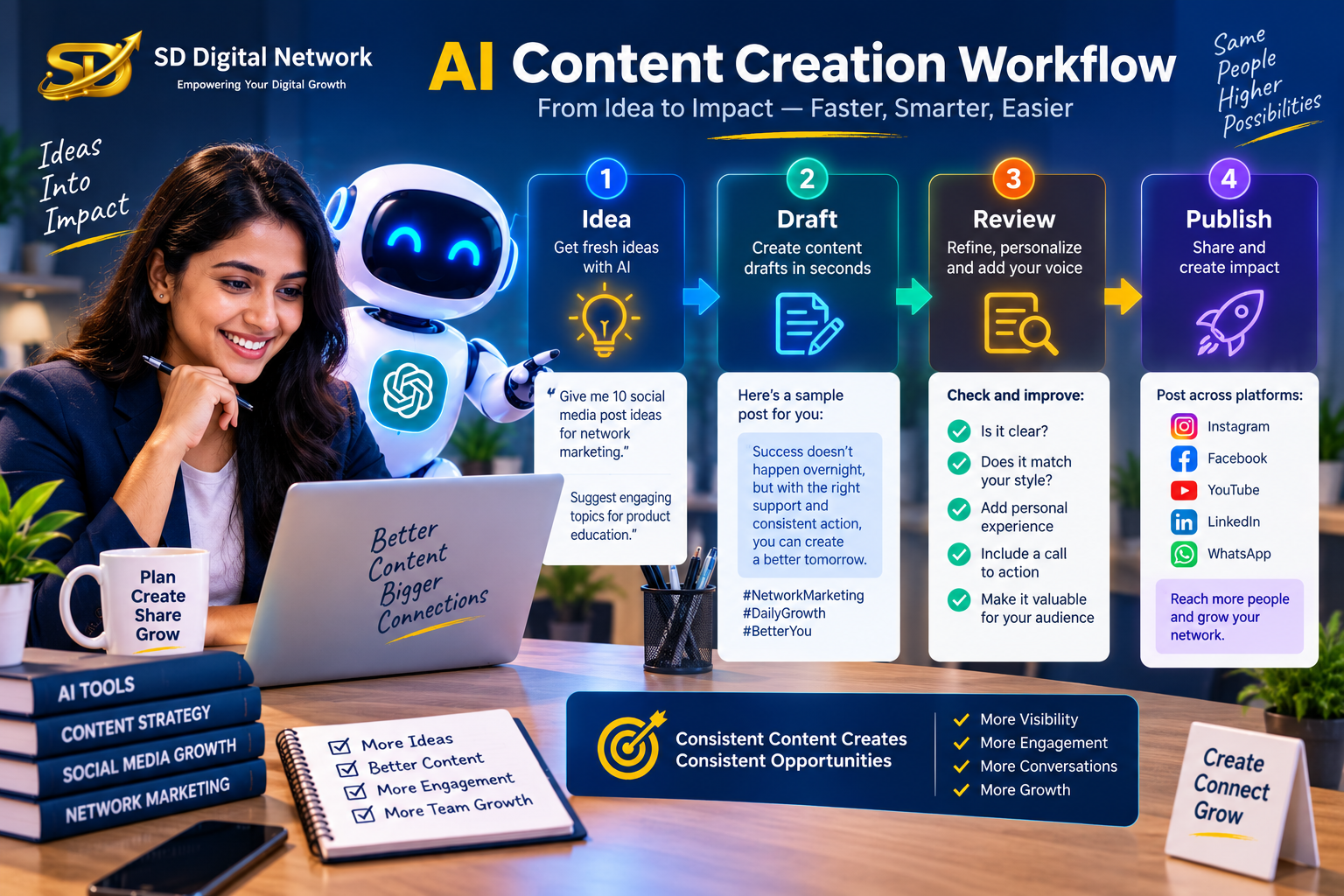
4. Social Media Content के लिए AI Workflow
Social media पर consistency जरूरी है, लेकिन हर दिन नया idea ढूँढना tiring हो सकता है। AI की मदद से आप weekly content themes बना सकते हैं। उदाहरण के लिए सोमवार education, मंगलवार myth-busting, बुधवार customer question, गुरुवार personal lesson, शुक्रवार practical tip और शनिवार reflection जैसे themes रखे जा सकते हैं। यह rigid schedule नहीं होना चाहिए; इसका उद्देश्य blank-page pressure कम करना है।
एक अच्छे social post में hook, context, useful point और simple next step हो सकता है। AI से आप एक ही topic के पांच hooks मांग सकते हैं। फिर सबसे natural hook चुनकर अपना actual experience जोड़ सकते हैं। इससे content ज्यादा structured होता है। लेकिन hook sensational या misleading नहीं होना चाहिए। Attention पाने के लिए exaggeration short-term में काम कर सकती है, लेकिन trust को नुकसान पहुँचा सकती है।
AI captions को platform-specific बनाने में भी मदद कर सकता है। Short caption, educational caption और storytelling caption के लिए अलग prompts बनाए जा सकते हैं। अगर आपका audience Hindi-speaking है तो आप simple Hindi में draft मांग सकते हैं और आवश्यक English business terms को natural तरीके से retain कर सकते हैं। इससे language audience के context के करीब रहती है।
Visual content के लिए AI से image concepts भी मांगे जा सकते हैं। उदाहरण के लिए 'human + AI collaboration' के लिए तीन visual directions, 'follow-up workflow' के लिए infographic concept और 'content planning' के लिए workspace scene मांगा जा सकता है। इससे designer या image-generation workflow को clear brief मिलता है।
एक useful practice है content calendar को केवल posting schedule न मानना। इसे learning schedule की तरह भी use करें। हर week एक audience question identify करें, उस पर content बनाएं और responses observe करें। फिर अगले week की content planning में उन observations को शामिल करें। AI इस feedback loop को organize करने में मदद कर सकता है।
Weekly content planning
AI से सात दिन के content ideas मांगने से पहले अपने audience के real questions और current priorities list करें। फिर AI को उन्हीं inputs पर work करने दें।
Engagement को केवल likes से न मापें
Useful comments, genuine questions, profile visits, conversations और quality responses भी valuable signals हो सकते हैं। AI आपको metrics organize करने में मदद कर सकता है, लेकिन interpretation context के साथ करें।
5. Prospecting में AI का Responsible Use
Prospecting का उद्देश्य केवल ज्यादा लोगों को message भेजना नहीं है। सही prospecting का मतलब है relevant लोगों तक useful information और respectful conversation पहुँचाना। AI यहाँ research preparation, audience segmentation और message drafting में मदद कर सकता है। लेकिन mass spam या deceptive personalization के लिए AI का उपयोग नहीं करना चाहिए।
मान लीजिए आपका audience तीन broad groups में है: beginners जो extra income skills explore कर रहे हैं, existing customers जो product education चाहते हैं, और team members जो duplication सीखना चाहते हैं। इन तीनों के लिए communication अलग होगी। AI से आप प्रत्येक group की common questions list कर सकते हैं और educational content ideas बना सकते हैं।
Cold outreach में AI-generated message बहुत polished हो सकता है, लेकिन अगर उसमें recipient के बारे में गलत assumptions हों तो message awkward लगेगा। इसलिए AI को केवल available and appropriate context दें और unsupported personal details invent न करने दें। Message को छोटा, respectful और permission-based रखना बेहतर है।
Prospecting preparation के लिए AI से question bank बनाना useful है। उदाहरण के लिए 'इस audience को opportunity explore करने से पहले किन concerns का answer चाहिए?' इस सवाल से concerns की categories मिल सकती हैं। फिर आप वास्तविक business information के आधार पर honest answers तैयार कर सकते हैं।
सबसे महत्वपूर्ण बात यह है कि AI prospect की consent या interest को replace नहीं करता। अगर कोई व्यक्ति interested नहीं है तो repeated AI-generated follow-ups भेजना relationship को नुकसान पहुँचा सकता है। AI का उपयोग conversation quality improve करने के लिए करें, volume बढ़ाने के लिए नहीं।
Responsible prospecting rule
Relevant → Respectful → Permission-based → Personalized → Human-reviewed communication रखें।
AI से क्या नहीं करना चाहिए
Fake testimonials, fabricated personal details, misleading urgency, guaranteed income claims या mass unsolicited spam तैयार करने के लिए AI का उपयोग न करें।
Write a short, friendly follow-up message for a prospect who showed interest in learning more about my business but has not replied yet. Keep it helpful, respectful, and non-pushy.
6. Follow-Up Messages को Natural और Helpful बनाना
Follow-up network marketing में सबसे sensitive activities में से एक है। बहुत जल्दी follow-up करने पर pressure महसूस हो सकता है और बहुत देर करने पर conversation ठंडी पड़ सकती है। AI आपको situation-specific draft बनाने में मदद कर सकता है, लेकिन timing और relationship context आपको समझना होगा।
एक useful follow-up framework है Context → Value → Permission. पहले पिछली conversation का context याद दिलाएं। फिर कोई genuinely useful information या next step दें। अंत में सामने वाले को space दें। AI से इसी framework के आधार पर multiple versions मांग सकते हैं: short WhatsApp version, professional version, friendly version और re-engagement version।
यदि prospect ने कहा था कि वह weekend पर जानकारी देखेगा, तो follow-up में वही context इस्तेमाल करें। 'Hi, आपने weekend पर information देखने की बात कही थी...' जैसी natural opening generic 'Just following up' से ज्यादा relevant हो सकती है। लेकिन यह तभी करें जब context वास्तव में मौजूद हो।
AI objections के लिए भी preparation कर सकता है। अगर कोई कहता है 'मेरे पास time नहीं है', तो AI से respectful response options मांगे जा सकते हैं। लेकिन objective objection को defeat करना नहीं, concern समझना होना चाहिए। कई बार सही response यह हो सकता है कि सामने वाले को बाद में बात करने का विकल्प दिया जाए।
Follow-up को automated pressure sequence बनाने के बजाय relationship-support tool की तरह देखें। हर interaction में नया value point जरूरी नहीं है; कभी-कभी simple check-in भी पर्याप्त है। AI से drafts लेना useful है, लेकिन final message आपकी natural voice में होना चाहिए।
Useful follow-up prompt
Write a short, friendly follow-up message for a prospect who showed interest in learning more about my business but has not replied yet. Keep it helpful, respectful, and non-pushy.
Follow-up quality checklist
क्या message context-aware है? क्या pressure-free है? क्या कोई genuine value है? क्या recipient को easy next step मिलता है? क्या message आपकी natural voice में है?
7. Product Education और Customer Communication
Product education में clarity और accuracy दोनों जरूरी हैं। AI किसी product topic को beginner-friendly language में explain करने, FAQ तैयार करने और educational outline बनाने में मदद कर सकता है। लेकिन product claims, ingredients, pricing, policies या health-related statements जैसी information को authoritative source से verify करना जरूरी है।
मान लीजिए किसी customer को product category समझ नहीं आ रही। आप AI से एक simple explanation, common questions और conversation guide बनवा सकते हैं। फिर official product information के अनुसार उसे edit कर सकते हैं। इससे आपकी explanation structured हो सकती है, लेकिन AI को product facts का final authority नहीं मानना चाहिए।
Customer communication में tone भी important है। अगर customer frustrated है तो purely promotional response inappropriate हो सकता है। AI से empathetic response draft मांगना useful हो सकता है, लेकिन actual issue को समझना और सही support channel देना आपकी responsibility है।
AI comparison tables और feature summaries की outline बना सकता है, लेकिन unsupported superiority claims से बचना चाहिए। 'यह product सबसे अच्छा है' जैसे claims की जगह verified features, intended use और customer questions पर focus करें। इससे communication ज्यादा trustworthy रहती है।
Product education को content strategy से भी जोड़ा जा सकता है। एक verified product FAQ से website article, short social post, customer handout और team training note की outline बनाई जा सकती है। इससे एक reliable information source के कई educational formats बन सकते हैं।
Verification first
AI से draft लें, official information से verify करें, फिर publish या share करें। यह विशेष रूप से product claims और sensitive information के लिए जरूरी है।
Customer-first communication
पहले customer का question समझें, फिर relevant information दें। हर interaction को sales pitch बनाने की जरूरत नहीं है।
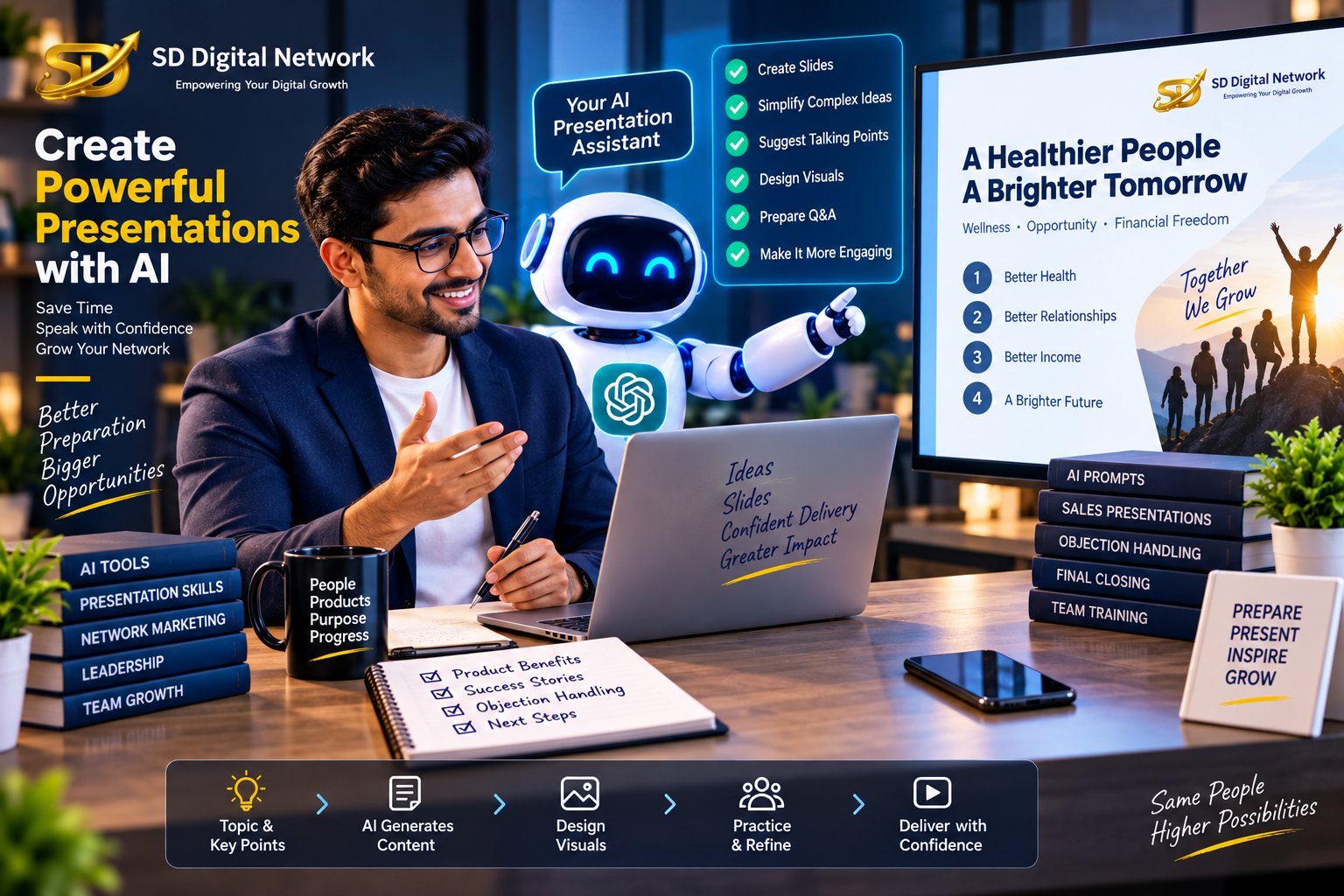
8. Presentation, Webinar और Meeting Preparation
Network marketers को अक्सर product presentation, opportunity overview, team meeting या training session के लिए preparation करनी होती है। AI इस preparation को structured बनाने में काफी मदद कर सकता है। आप audience, duration और objective देकर agenda, talking points और question bank तैयार कर सकते हैं।
उदाहरण के लिए 30-minute beginner training में introduction, business basics, communication principles, practical example, Q&A और action steps जैसे sections हो सकते हैं। AI आपको timing suggestions दे सकता है। इसके बाद आप अपने actual training experience के अनुसार sequence बदल सकते हैं।
Presentation preparation में AI का एक powerful use rehearsal है। आप AI से कह सकते हैं कि वह skeptical audience member की तरह questions पूछे। इससे आपको difficult questions के लिए सोचने का अवसर मिलता है। लेकिन answers हमेशा verified business information पर आधारित होने चाहिए।
Webinar के लिए AI opening script, transitions और closing summary तैयार कर सकता है। इससे speaker का cognitive load कम हो सकता है। फिर भी script को word-for-word पढ़ने के बजाय talking points की तरह use करना बेहतर है, ताकि delivery natural रहे।
Team meeting में AI से पिछले discussion points को agenda में बदलना भी useful हो सकता है, यदि आपने notes उपलब्ध कराए हों। उदाहरण के लिए pending questions, training needs, action items और next-week priorities की list बनाई जा सकती है। इससे meeting ज्यादा focused हो सकती है।
Rehearsal prompt
Act as a skeptical but respectful beginner audience member. Ask me 15 realistic questions about my presentation topic, one at a time, and wait for my answer before asking the next question.
Presentation principle
AI से preparation लें; delivery में अपना experience और personality रखें।
Step 1 → Understand the training goal
Step 2 → Create a simple learning path
Step 3 → Practice with realistic scenarios
Step 4 → Review and personalize
Step 5 → Teach, observe and improve
9. Team Training और Duplication
Network marketing team में duplication तभी practical होती है जब processes simple और teachable हों। AI complicated information को step-by-step training material में organize करने में मदद कर सकता है। उदाहरण के लिए new-member onboarding को Day 1, Day 2, Week 1 और Week 2 actions में break किया जा सकता है।
AI से training curriculum बनाने से पहले actual business process स्पष्ट करें। कौन-से tasks essential हैं? कौन-सी information official है? कौन-सी activities optional हैं? कौन-सी common mistakes नए members करते हैं? इन inputs के आधार पर AI structured curriculum बना सकता है।
Team members के learning styles अलग हो सकते हैं। कोई checklist पसंद करता है, कोई video script, कोई examples और कोई FAQ। AI से एक training topic को multiple formats में convert किया जा सकता है। इससे leader को हर बार content zero से नहीं बनाना पड़ता।
Coaching में AI reflection questions भी generate कर सकता है। उदाहरण के लिए team member से पूछा जा सकता है: इस week आपने कितनी meaningful conversations कीं? कौन-सा question बार-बार आया? किस step पर difficulty हुई? अगली week में क्या experiment करेंगे? ऐसे questions activity से ज्यादा learning पर focus करते हैं।
Duplication का मतलब blind copying नहीं होना चाहिए। हर team member को अपने personality और circumstances के अनुसार process adapt करने की जगह मिलनी चाहिए। AI training को standardize करने में मदद कर सकता है, लेकिन human coaching और individual support जरूरी रहेंगे।
Simple onboarding model
Understand → Practice → Review → Improve → Repeat. AI हर stage के लिए checklists और practice scenarios तैयार कर सकता है।
Leader's role
AI training material तैयार करने में speed दे सकता है; leader context, encouragement, feedback और judgement देता है।
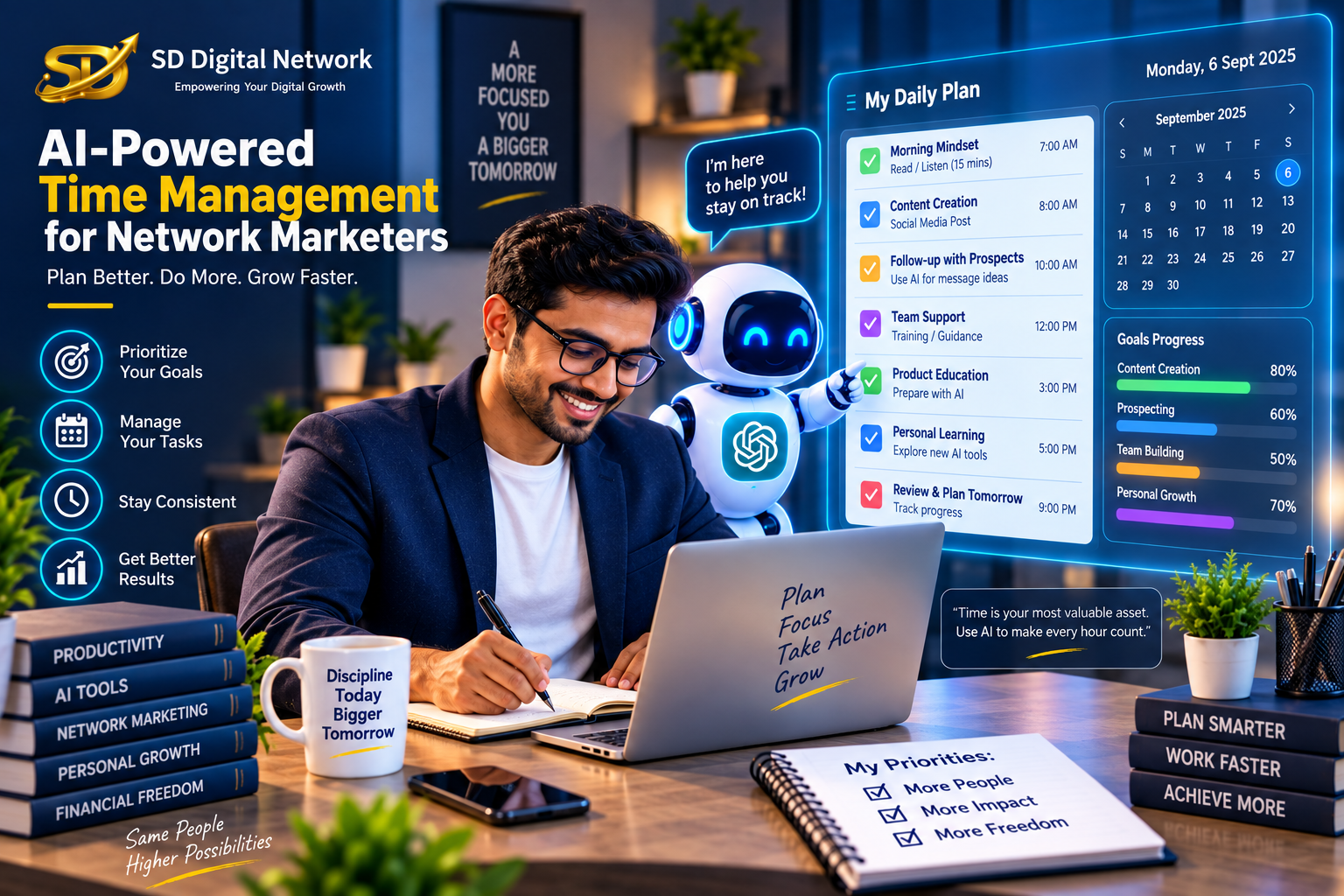
10. Time Management और Daily Workflow
AI का सबसे practical benefit शायद time management में दिखाई दे सकता है। Network marketer के दिन में content, conversations, learning, customer support और team activities mix हो सकती हैं। अगर priorities clear नहीं हों तो पूरा दिन busy रहकर भी important work अधूरा रह सकता है।
AI से daily task list को priority categories में organize कराया जा सकता है। उदाहरण के लिए Must Do, Should Do और Could Do. लेकिन priority तय करने के लिए business goals स्पष्ट होना चाहिए। AI आपके goals को देखकर schedule suggestion दे सकता है, लेकिन final decision आपकी current reality पर निर्भर करेगा।
Weekly review के लिए भी AI useful है। आप अपने completed tasks, key conversations, content performance और learning notes को structured summary में बदल सकते हैं। फिर पूछ सकते हैं कि कौन-से activities repeat होनी चाहिए, कौन-सी simplify हो सकती हैं और कौन-सी stop करनी चाहिए।
Batching एक और useful concept है। Content creation को पूरे दिन छोटे-छोटे interruptions में करने के बजाय एक focused block में किया जा सकता है। AI ideas और drafts पहले से तैयार करने में मदद कर सकता है। इसी तरह follow-up preparation, training notes और weekly planning के लिए separate blocks बनाए जा सकते हैं।
Time management में AI का उद्देश्य schedule को इतना भर देना नहीं है कि हर minute planned हो। Real business में unexpected conversations और customer needs आती हैं। इसलिए flexible blocks रखना बेहतर है। AI को planning assistant की तरह use करें, taskmaster की तरह नहीं।
Daily planning prompt
Here is my list of tasks for today: [tasks]. My main business goal is [goal]. Organize these tasks into high, medium, and low priority, suggest a realistic order, and identify anything that can be simplified or postponed.
Weekly review question
What activities created the most useful progress this week, and what should I change next week?
11. Research और Learning में AI का उपयोग
Network marketing में continuous learning जरूरी है। नई digital tools, communication approaches, content formats और customer expectations लगातार बदलते हैं। AI किसी topic को beginner-friendly language में explain करने, glossary बनाने और learning roadmap तैयार करने में मदद कर सकता है।
अगर आपको कोई technical concept समझ नहीं आता, तो AI से पहले simple explanation मांगें। फिर example मांगें। उसके बाद practical application पूछें। यह progressive learning approach information overload को कम कर सकती है।
Research में एक महत्वपूर्ण rule है: AI-generated answer को automatically verified fact न मानें। अगर information current, sensitive या business-critical है तो reliable source check करें। AI से research questions और verification checklist तैयार कराना useful है।
Learning notes को भी AI से organize किया जा सकता है। आपने किसी webinar से 20 points लिखे हैं तो AI उन्हें categories, action items और questions में बदल सकता है। इससे passive notes active learning plan में बदल सकते हैं।
एक strong learning workflow है Learn → Practice → Reflect → Teach. AI हर stage में support दे सकता है। लेकिन वास्तविक mastery practice और application से आती है। इसलिए AI से केवल summaries लेने के बजाय concepts को अपने work में apply करें।
Teach-back technique
किसी concept को AI से simple language में समझने के बाद उसे अपनी language में किसी team member को explain करने की कोशिश करें। जहाँ explanation अटकती है, वहीं आपका next learning point हो सकता है।
Research checklist
Source? Date? Context? Evidence? Business relevance? इन questions से AI-generated information को responsibly evaluate करें।
12. Personal Branding और Thought Leadership
Personal branding का मतलब केवल attractive graphics या frequent posting नहीं है। यह उस perception से जुड़ा है जो लोग आपकी expertise, consistency और communication के आधार पर बनाते हैं। AI आपको content themes, topic clusters और editorial ideas organize करने में मदद कर सकता है।
सबसे पहले अपने knowledge areas define करें। उदाहरण के लिए AI tools for network marketers, communication skills, productivity, customer education और leadership. फिर AI से प्रत्येक area के भीतर beginner, intermediate और advanced topics निकालें। इससे content random नहीं बल्कि strategic बन सकता है।
Thought leadership के लिए personal observations बहुत important हैं। AI generic opinions बना सकता है, लेकिन आपकी real learning ज्यादा valuable हो सकती है। इसलिए हर article में कम-से-कम कुछ ऐसे insights रखें जो आपके actual experience, experiments या audience questions से आए हों।
AI से tone consistency भी maintain की जा सकती है। अगर आप चाहते हैं कि content practical, respectful, simple और educational रहे, तो यह style guide prompt में define कर सकते हैं। इससे drafts के बीच consistency बढ़ सकती है।
Personal branding में authenticity की सबसे बड़ी test यह है कि क्या आप वही बात offline conversation में भी naturally कहेंगे। अगर AI-generated language बहुत artificial लगती है, तो उसे simplify करें। आपकी website और social presence आपकी वास्तविक communication style से connected होनी चाहिए।
Personal brand content pillars
Knowledge + Experience + Practical Help + Values. इन चार pillars से content plan बनाने पर personal brand ज्यादा balanced बन सकता है।
AI का role
AI structure और consistency में मदद करे; personal stories, opinions और values आपकी अपनी रहें।
13. AI Prompts कैसे लिखें ताकि Output बेहतर मिले
AI का output केवल tool की capability पर depend नहीं करता; prompt quality भी बहुत matter करती है। एक vague prompt जैसे 'network marketing post लिखो' broad result देगा। इसके विपरीत अगर आप audience, purpose, tone, platform, length और key points बताते हैं तो output ज्यादा targeted हो सकता है।
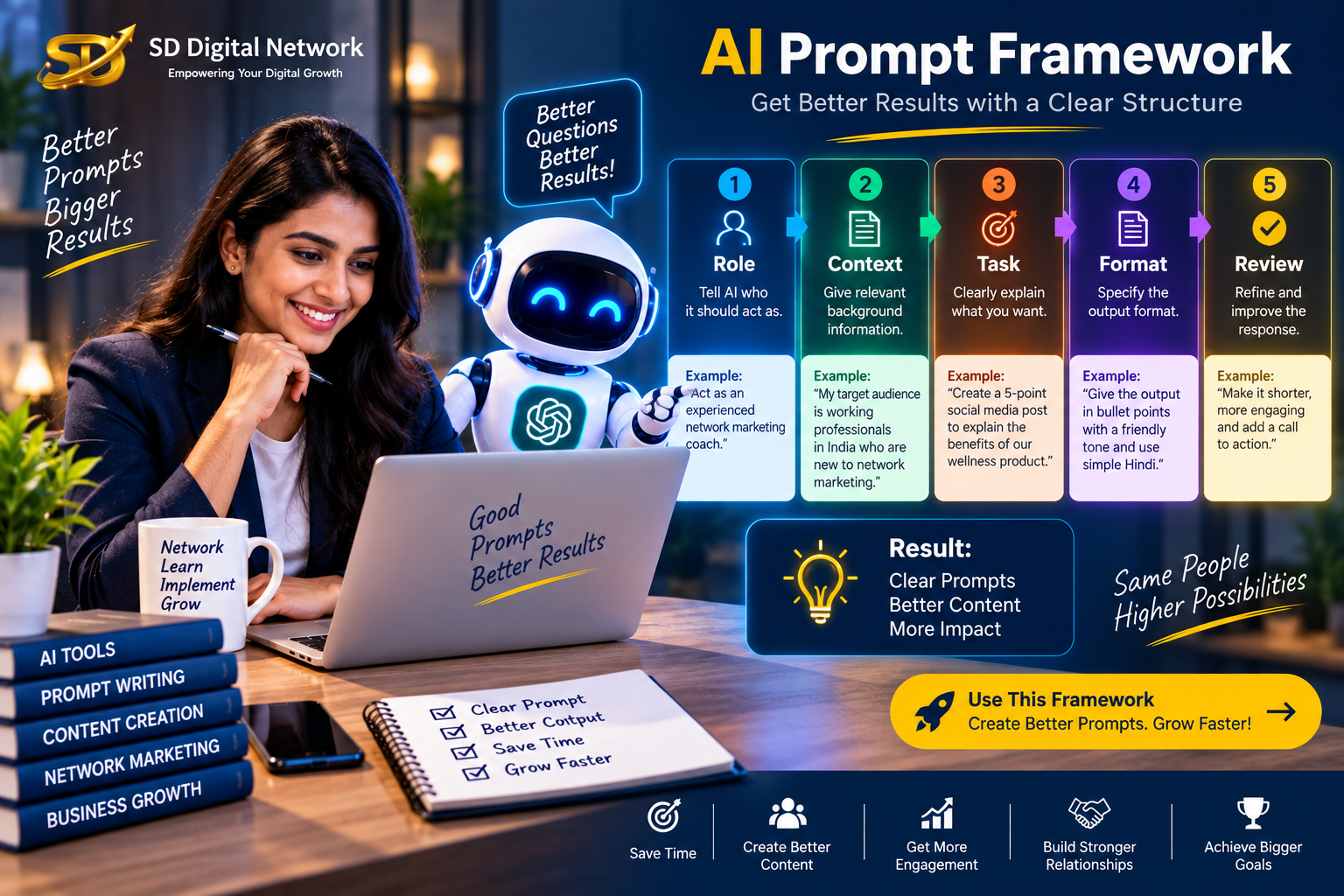
Role instruction कभी-कभी useful होती है। उदाहरण के लिए 'Act as a content strategist for a beginner-focused network marketing education website' जैसी instruction AI को context देती है। लेकिन role instruction अकेली पर्याप्त नहीं है। उसके बाद actual task और constraints भी बताने चाहिए।
Context सबसे important components में से एक है। अगर आप किसी existing paragraph को improve करवाना चाहते हैं तो उसे prompt में include करें। अगर आप product FAQ बनवा रहे हैं तो verified product information दें। अगर आप follow-up message बना रहे हैं तो previous conversation का relevant context दें।
Output format specify करना भी helpful है। आप कह सकते हैं कि answer table में चाहिए, bullet list में चाहिए, तीन options चाहिए या 150 words में चाहिए। इससे editing time कम हो सकता है।
Constraints quality improve कर सकते हैं। जैसे 'Do not make income guarantees', 'Do not invent product claims', 'Keep the tone respectful', 'Use simple Hindi with natural English business terms' या 'Write the AI prompt entirely in English'. Clear constraints AI को boundaries समझने में मदद करते हैं।
Iterative prompting भी सीखना चाहिए। पहला answer final नहीं होता। आप कह सकते हैं: इसे simpler बनाओ, Indian audience के लिए relevant examples जोड़ो, इसे less promotional बनाओ, तीन alternatives दो, या unsupported claims हटाओ। इस तरह AI के साथ conversation करके result refine किया जा सकता है।
A reusable prompt formula
Role + Context + Task + Audience + Format + Tone + Constraints + Examples + Quality check. हर prompt में सभी elements जरूरी नहीं हैं, लेकिन complex tasks में यह framework useful है।
Prompt refinement
Draft → Critique → Improve → Verify. एक ही prompt में सब कुछ करने के बजाय staged workflow कई बार बेहतर result देता है।
Important: AI-generated information को publish या share करने से पहले relevant facts, product claims, policies और business information को verify करें। Personal or confidential information को अनावश्यक रूप से AI tools में share न करें।
14. Common Mistakes जो Network Marketers को Avoid करनी चाहिए
पहली common mistake है AI output को बिना review के publish करना। Fluent language देखकर content सही लग सकता है, लेकिन उसमें incorrect facts, awkward claims या generic statements हो सकते हैं। इसलिए review हमेशा रखें।
दूसरी mistake है बहुत कम context देना। 'Write a caption' के बजाय topic, audience, purpose और tone बताना बेहतर है। Context जितना relevant होगा, editing उतनी कम करनी पड़ सकती है।
तीसरी mistake है हर interaction में AI language use करना। अगर prospect को message robotic लगता है तो trust कम हो सकता है। AI draft को अपनी natural voice में rewrite करना जरूरी है।
चौथी mistake है quantity के पीछे भागना। AI से 100 content ideas मिल सकते हैं, लेकिन audience को 100 generic posts की जरूरत नहीं है। एक useful, relevant और thoughtful post कई weak posts से ज्यादा valuable हो सकता है।
पाँचवीं mistake है sensitive information को बिना सोचे AI tool में डालना। Personal data, confidential business information या private conversations को handle करते समय tool policies और privacy considerations समझना जरूरी है। केवल वही information share करें जिसकी जरूरत हो।
छठी mistake है AI को business judgement देना। AI strategy suggestions दे सकता है, लेकिन compensation plans, legal requirements, product claims या financial decisions जैसी चीजों में authoritative sources और qualified professionals की जरूरत पड़ सकती है।
The 80/20 rule for AI-assisted content
AI से शायद 80% draft preparation हो सकती है, लेकिन final 20%—fact checking, personalization, judgement और quality control—अक्सर सबसे important होता है। यह fixed mathematical rule नहीं, बल्कि useful working mindset है।
Privacy mindset
Data minimization रखें: जितना context जरूरी है उतना ही दें। पहचान योग्य personal information और confidential material को अनावश्यक रूप से share न करें।
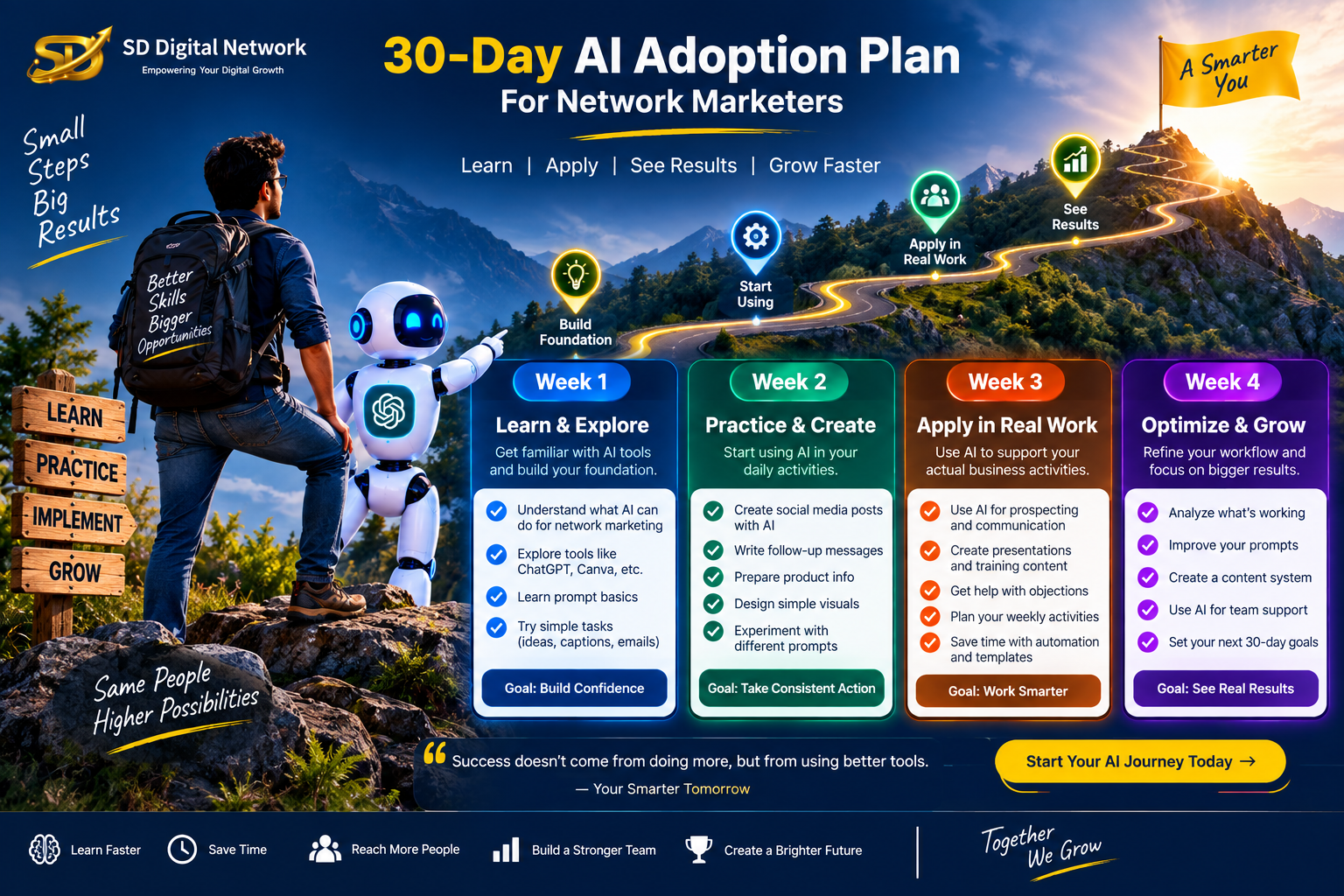
15. 30-Day AI Adoption Plan for Network Marketers
AI को एक ही दिन में हर workflow में डालने की जरूरत नहीं है। Better approach है 30-day gradual adoption. पहले week में केवल content ideation और simple rewriting जैसे low-risk tasks चुनें। उद्देश्य tool सीखना नहीं, workflow समझना होना चाहिए।
Week 1 में रोज एक small task AI से करवाएँ। उदाहरण के लिए content ideas, headline alternatives, checklist या summary. हर task के बाद note करें कि output में क्या useful था और क्या edit करना पड़ा। इससे आपको अपने लिए useful prompt patterns समझ आएँगे।
Week 2 में communication workflows जोड़ें। Follow-up drafts, FAQ preparation, objection practice और meeting questions जैसे tasks लें। इस stage पर human review और personalization को mandatory रखें।
Week 3 में planning और team support पर जाएँ। Weekly content calendar, training outline, onboarding checklist और meeting agenda जैसे workflows बनाएँ। यहाँ AI को repeatable processes में integrate किया जा सकता है।
Week 4 में review करें। कौन-से tasks में वास्तव में time बचा? कौन-से outputs useful रहे? कहाँ ज्यादा editing करनी पड़ी? कौन-सी activities AI के बिना बेहतर थीं? इस review से आपका personal AI workflow बनेगा।
30 days के बाद goal यह नहीं होना चाहिए कि आप हर काम AI से करवाएँ। Goal यह होना चाहिए कि आप clearly जानते हों कि AI कहाँ value देता है और कहाँ human effort ज्यादा important है। यही mature adoption है।
30-day roadmap
Week 1: Content → Week 2: Communication → Week 3: Planning & Team → Week 4: Review & Optimization.
Success metric
Time saved + quality improved + consistency improved + stress reduced. केवल number of AI outputs को success metric न बनाएं।

16. Real-World Human + AI Workflow
अब पूरे article को एक practical daily scenario में जोड़ते हैं। मान लीजिए एक network marketer सुबह अपनी weekly priorities देखता है। वह AI से task list organize करवाता है, लेकिन final priorities अपने business goals और current commitments के आधार पर तय करता है। इसके बाद वह content topic चुनता है और AI से outline बनवाता है।
Outline मिलने के बाद वह अपने actual experience और verified information जोड़ता है। AI draft तैयार करता है। Marketer language को अपने audience के अनुसार simplify करता है और claims verify करता है। फिर उसी article से तीन social post ideas और एक short-video outline बनवाता है। इस तरह एक content idea कई assets में बदल जाता है।
दोपहर में एक prospect के साथ previous conversation का follow-up करना है। Marketer relevant context AI को देता है और तीन message options मांगता है। वह सबसे natural option चुनता है, उसमें अपनी language जोड़ता है और भेजने से पहले फिर से पढ़ता है। अगर prospect reply नहीं करता तो वह pressure बढ़ाने के बजाय appropriate timing का इंतजार करता है।
शाम को team training है। AI से पहले से question bank और session outline तैयार है। लेकिन training के दौरान leader अपनी real examples और team members के questions के आधार पर discussion बदलता है। AI preparation assistant है; actual coaching human interaction से होती है।
दिन के अंत में marketer completed activities को review करता है। AI summary बनाता है और अगले week के improvement questions सुझाता है। Marketer देखता है कि कौन-सी activities meaningful progress ला रही हैं। इस तरह AI केवल isolated tasks नहीं कर रहा; वह एक broader productivity system का हिस्सा बन गया है।
यही human + AI workflow का core idea है: Human sets direction → AI accelerates preparation → Human reviews → Human communicates → AI helps organize learning → Human decides what to improve. जब यह balance बना रहता है तो technology relationship और judgement को replace नहीं करती; उन्हें support करती है।
The complete workflow
Plan → Create → Review → Personalize → Communicate → Measure → Learn → Improve.
What makes it sustainable
Simple repeatable workflows, clear boundaries, human review और continuous learning. यही long-term AI adoption की foundation है।
17. AI से Better Decision Preparation कैसे करें
Network marketing में कई decisions ऐसे होते हैं जहाँ problem का सही answer तुरंत दिखाई नहीं देता। उदाहरण के लिए किस content topic पर focus किया जाए, team training में कौन-सा topic पहले लिया जाए, किसी recurring customer question के लिए कौन-सा educational resource बनाया जाए, या weekly activities में कौन-सी चीज simplify की जाए। AI इन decisions को आपके लिए तय करने के बजाय decision preparation में मदद कर सकता है।
सबसे पहले problem को clearly define करें। यदि question है कि “मेरी content strategy काम क्यों नहीं कर रही?”, तो AI से सीधे solution मांगने के बजाय पहले data और observations दें। पिछले कुछ posts के topics, audience responses, comments और आपके own observations को summarize करके patterns पूछ सकते हैं। इससे conversation ज्यादा meaningful हो सकती है।
AI से multiple options और उनके possible advantages तथा disadvantages पूछना भी useful है। मान लीजिए आपके पास दो approaches हैं: educational blog series या short-video series। AI से दोनों approaches के लिए effort, consistency, audience suitability और repurposing potential की तुलना करने को कह सकते हैं। Final decision फिर भी आपके resources और goals के अनुसार होगा।
Decision preparation में assumptions को अलग करना भी जरूरी है। AI से पूछें कि इस plan में कौन-सी assumptions हैं और कौन-सी information verify करनी चाहिए। इससे hidden gaps दिखाई दे सकते हैं। यह खास तौर पर तब helpful है जब आप किसी नए workflow को team के साथ implement करने वाले हों।
एक अच्छा practice है कि AI से “What could go wrong?” भी पूछें। हर plan में risks और unintended consequences हो सकते हैं। यदि आप automated follow-up system बना रहे हैं तो frequency, tone, consent और personalization जैसे factors पर विचार करना जरूरी है। AI possible risks की list बना सकता है, जबकि आप तय करेंगे कि कौन-से risks वास्तविक हैं और कैसे manage करने हैं।
इस तरह AI decision-maker नहीं बल्कि thinking partner बनता है। वह questions पूछ सकता है, options organize कर सकता है, assumptions identify कर सकता है और comparison framework दे सकता है। लेकिन business judgement, responsibility और final choice हमेशा human side पर रहनी चाहिए।
18. AI-Assisted Content Repurposing System
एक अच्छा long-form article कई useful content assets का source बन सकता है। समस्या अक्सर यह होती है कि article publish करने के बाद उसका बाकी potential इस्तेमाल नहीं होता। AI से आप उसी verified article को अलग formats में transform कर सकते हैं, जिससे content creation effort का बेहतर उपयोग हो सकता है।
मान लीजिए आपने AI और network marketing workflow पर एक detailed article लिखा है। पहले AI से article के ten key lessons निकालें। फिर उन lessons को अलग-अलग social post ideas में बदलें। इसके बाद तीन short-video scripts, five FAQ questions और एक team discussion outline तैयार कर सकते हैं। हर output को original article और verified facts के against review करें।
Repurposing में एक important principle है कि हर platform के लिए content को केवल copy-paste न करें। Website article detailed हो सकता है, जबकि social post एक single insight पर focus कर सकता है। Short video में एक problem और one practical action हो सकता है। Team training में वही idea discussion question के रूप में बदल सकता है।
AI से content variations बनाते समय audience intent भी specify करें। Customer education और business opportunity education को अलग रखें। Beginner audience के लिए jargon कम रखें। Experienced audience के लिए deeper examples और workflow details जोड़े जा सकते हैं। इससे repurposed content repetitive होने के बजाय purpose-driven बनता है।
एक content library बनाना भी useful है। हर published article के साथ title, key lessons, FAQs, examples, visual ideas, social hooks और future content opportunities की list रखी जा सकती है। AI इस library को organize करने में मदद कर सकता है। समय के साथ यह आपकी personal knowledge base जैसा काम कर सकती है।
इस workflow से consistency improve हो सकती है, लेकिन originality की responsibility आपकी रहती है। हर repurposed piece में audience के लिए नया context या useful angle होना चाहिए। केवल wording बदलना पर्याप्त नहीं है। Value बदलनी या contextually adapt होनी चाहिए।
19. Website Blog के लिए AI Content Quality Checklist
AI-assisted blog publish करने से पहले quality checklist रखना बहुत valuable है। सबसे पहले title check करें। क्या title clear है? क्या reader समझ सकता है कि article किस problem या opportunity के बारे में है? क्या title unnecessarily exaggerated promise तो नहीं करता? SEO के लिए keyword helpful हो सकता है, लेकिन readability और user intent भी equally important हैं।
Introduction को देखें। क्या पहले कुछ paragraphs reader को context देते हैं? क्या article का purpose स्पष्ट है? क्या reader को पता चलता है कि उसे आगे क्या सीखने मिलेगा? Strong introduction curiosity create कर सकता है, लेकिन उसे misleading hook की जरूरत नहीं होती।
Heading structure भी review करें। H2 sections logical sequence में होने चाहिए और H3 केवल तब इस्तेमाल करें जब subsection वास्तव में अलग idea explain करता हो। बहुत सारे headings article को fragmented बना सकते हैं, जबकि बहुत कम headings long-form article को difficult to scan बना सकते हैं।
हर factual statement को context के अनुसार check करें। Product claims, business policies, pricing, statistics, legal information या current tool features जैसी चीजें विशेष attention मांगती हैं। AI की fluency को verification का substitute न बनाएं। जहाँ source जरूरी हो वहाँ authoritative source से verify करें।
Language consistency भी important है। आपकी website के लिए simple Hindi और natural English technical/business terms का balance बनाए रखें। AI कभी-कभी बहुत formal Hindi या बहुत casual Hinglish generate कर सकता है। Final editing में language को आपकी established brand voice के करीब रखें।
अंत में reader experience देखें। क्या paragraphs बहुत लंबे हैं? क्या important ideas visually easy to scan हैं? क्या images वास्तव में content को support करती हैं? क्या CTA article के topic से connected है? क्या mobile screen पर headings और buttons comfortable हैं? यह final human review आपके Master Blog System की quality बनाए रखेगा।
20. Network Marketing में AI Ethics और Trust
AI adoption के साथ ethics पर ध्यान देना उतना ही जरूरी है जितना productivity पर। Network marketing में trust एक long-term asset है। यदि AI-generated content misleading claims, fake stories या artificial urgency create करने लगे तो short-term engagement के बावजूद long-term credibility कमजोर हो सकती है। इसलिए AI workflow में ethical boundaries पहले से define करना useful है।
पहली boundary honesty है। Testimonials या personal experiences fabricate नहीं किए जाने चाहिए। यदि किसी result का वास्तविक evidence नहीं है तो AI को उसे success story की तरह लिखने नहीं देना चाहिए। इसी तरह income expectations के बारे में unrealistic promises avoid करने चाहिए। AI language को polished बना सकता है, लेकिन truthfulness की responsibility human की रहती है।
दूसरी boundary privacy है। Prospect की private conversation, phone number, personal situation या confidential business information को unnecessary AI prompt में डालने से बचें। अगर किसी situation को explain करने के लिए details जरूरी हैं तो identifying information हटाकर generic context दिया जा सकता है।
तीसरी boundary consent है। AI से personalized messages बनाना useful हो सकता है, लेकिन personalization का मतलब surveillance नहीं होना चाहिए। सामने वाले ने जितना context voluntarily share किया है, उसी के भीतर communication रखें। ऐसे details का उल्लेख न करें जो recipient को uncomfortable या monitored महसूस करा सकते हैं।
चौथी boundary human accountability है। यदि AI से कोई error होता है तो यह कहना पर्याप्त नहीं है कि “AI ने ऐसा लिखा था।” Business communication में publish करने वाला व्यक्ति final responsibility रखता है। इसलिए important content के लिए review process जरूरी है।
Ethical AI use ultimately trust को protect करता है। जब audience को महसूस होता है कि technology का उपयोग उन्हें manipulate करने के लिए नहीं बल्कि बेहतर information और communication देने के लिए हो रहा है, तब AI आपकी brand credibility को support कर सकता है।
21. अपना Personal AI Workflow कैसे बनाएं
अब तक हमने कई use cases देखे हैं। अगला step है इन ideas को अपने personal workflow में बदलना। हर network marketer का business, audience, schedule और communication style अलग होता है। इसलिए किसी दूसरे व्यक्ति का AI workflow exactly copy करने के बजाय अपने सबसे repetitive और time-consuming tasks identify करना बेहतर है।
एक simple audit से शुरुआत करें। पिछले सात दिनों में आपने कौन-से tasks बार-बार किए? Content ideas, captions, follow-up preparation, meeting notes, training material, customer FAQs, planning या research? हर task के सामने approximate effort लिखें। फिर देखें कि कौन-से tasks AI assistance के लिए suitable हैं।
इसके बाद केवल एक workflow चुनें। उदाहरण के लिए weekly content planning. उसके लिए एक reusable prompt तैयार करें जिसमें audience, business theme, preferred tone, content formats और constraints defined हों। हर week नया context देकर उसी prompt को improve करें। इससे prompt धीरे-धीरे आपकी जरूरत के अनुसार optimized होगा।
दूसरे चरण में review checklist बनाएं। Content के लिए facts, tone, originality और audience relevance check करें। Follow-up के लिए context, respect, consent और natural voice check करें। Product education के लिए verified information और claims check करें। अलग workflows के लिए अलग checklists ज्यादा practical हो सकती हैं।
तीसरे चरण में reusable assets बनाएं। Prompt library, content templates, FAQ structures, meeting agendas और training frameworks को organized रखें। इससे AI के साथ काम करने का समय और कम हो सकता है। लेकिन templates को regularly review करें ताकि वे outdated assumptions पर depend न करें।
चौथे चरण में measure करें। AI use करने के बाद केवल output count न देखें। देखें कि preparation time कितना कम हुआ, quality कितनी improve हुई, communication ज्यादा consistent हुआ या नहीं, और क्या आपको important human work के लिए ज्यादा time मिला। अगर कोई workflow value नहीं दे रहा, तो उसे remove या simplify करें।
अंत में अपने workflow को simple रखें। एक sustainable AI system वह नहीं है जिसमें सबसे ज्यादा tools या prompts हों। वह system बेहतर है जिसे आप realistically हर week use कर सकें। Start small, learn from results, personalize the process और धीरे-धीरे expand करें।
Conclusion
AI network marketers के लिए एक powerful assistant बन सकता है, खासकर तब जब इसे clear purpose और practical workflow के साथ use किया जाए। Content creation, prospecting preparation, follow-up drafting, product education, presentation preparation, team training, planning और learning जैसे कई areas में AI repetitive preparation को faster और more organized बना सकता है।
लेकिन AI का सबसे अच्छा उपयोग technology को human relationship के ऊपर रखने में नहीं, बल्कि human effort को बेहतर support देने में है। Network marketing में trust, empathy, listening, credibility और genuine connection की importance बनी रहती है। AI आपको बेहतर preparation दे सकता है, लेकिन सामने वाले व्यक्ति को समझना और सही decision लेना आपकी responsibility है।
इस पूरे guide से सबसे important lesson यही है कि AI adoption छोटे steps से शुरू किया जा सकता है। पहले एक workflow चुनिए। उसके लिए simple prompt बनाइए। Output review कीजिए। अपनी voice जोड़िए। Result observe कीजिए। फिर उसी workflow को improve कीजिए। जब एक process stable हो जाए, तभी अगला process add करें।
अगर आप आज से शुरुआत करना चाहते हैं तो केवल एक practical task चुनें—जैसे weekly content planning या follow-up draft preparation। अगले सात दिनों तक उसी workflow को use करें और देखें कि कितना time बचा, quality में क्या change आया और कहाँ human input जरूरी रहा। यही छोटा experiment आपके लिए ज्यादा useful होगा बनिस्बत इसके कि आप एक साथ बहुत सारे AI tools सीखने लगें।
अंततः AI का real value इस बात में नहीं है कि वह कितना content generate कर सकता है। Real value इस बात में है कि वह आपको कितना बेहतर सोचने, organize करने, prepare करने और communicate करने में मदद करता है। जब technology आपकी strengths को support करती है और human relationships center में रहते हैं, तब AI वास्तव में work smarter का रास्ता बन सकता है।
22. AI के साथ Better Conversations की तैयारी
Network marketing में conversation एक simple script से बहुत आगे की चीज है। सामने वाला व्यक्ति किस stage पर है, उसका question क्या है, उसकी priority क्या है और वह किस तरह की information चाहता है—इन सबका ध्यान रखना पड़ता है। AI conversation को human बनाने के बजाय conversation की तैयारी को better organized बना सकता है। यही distinction समझना बहुत जरूरी है।
Conversation से पहले AI को situation का neutral summary दें। उदाहरण के लिए, “यह व्यक्ति product category के बारे में curious है, लेकिन price और suitability को लेकर questions पूछ रहा है।” फिर AI से संभावित questions और respectful response directions मांगें। इससे आपको conversation में defensive या overly promotional होने के बजाय prepared रहने में मदद मिल सकती है।
AI से listening questions तैयार करवाना भी useful है। कई बार marketer के पास answer देने की जल्दी होती है, जबकि prospect को पहले अपनी situation explain करने की जरूरत होती है। AI से पूछें कि इस situation को समझने के लिए कौन-से open-ended questions पूछे जा सकते हैं। फिर उन questions को अपनी natural language में use करें।
Conversation preparation में objection handling को debate न बनाएं। यदि कोई व्यक्ति time, budget, trust या understanding को लेकर concerned है तो AI से “कैसे convince करें” पूछने के बजाय “इस concern को respectfully समझने के लिए कौन-से questions पूछे जा सकते हैं?” पूछना ज्यादा healthy approach है। इससे relationship और consent दोनों को priority मिलती है।
AI से conversation के बाद notes organize करना भी संभव है, यदि आप appropriate and non-sensitive notes provide करें। उदाहरण के लिए next step, unanswered question और promised follow-up date को task list में बदला जा सकता है। इससे important details भूलने की संभावना कम हो सकती है।
एक और useful habit है conversation reflection। बातचीत के बाद खुद से पूछें: क्या मैंने पर्याप्त सुना? क्या मैंने जरूरत से ज्यादा information दी? क्या सामने वाले का actual question clear हुआ? क्या next step mutually understood था? AI इन reflection questions को structured review में बदल सकता है।
इस approach से AI communication को automate नहीं करता; वह communication preparation और reflection को support करता है। यही network marketing जैसे relationship-driven business में ज्यादा sustainable use है।
23. AI से Simple Systems बनाइए, सिर्फ Individual Tasks नहीं
AI की real power तब ज्यादा दिखाई देती है जब उसे isolated task के बजाय system में रखा जाता है। यदि हर दिन अलग-अलग prompt लिखना पड़े तो कुछ समय बाद workflow फिर complicated लग सकता है। इसके बजाय recurring activities के लिए simple repeatable systems बनाएं।
उदाहरण के लिए content system में चार stages हो सकती हैं: Idea Bank, Draft, Review और Repurpose. Idea Bank में audience questions और observations जमा करें। Draft stage में AI से outline और first draft लें। Review stage में facts, tone और originality check करें। Repurpose stage में approved content से smaller assets तैयार करें।
Follow-up system में Conversation Context, Next Step और Follow-up Review जैसे fields रखे जा सकते हैं। AI context को concise summary में बदल सकता है और next action का draft बना सकता है। लेकिन timing और actual relationship judgement human side पर रहना चाहिए।
Team training system में Topic, Objective, Example, Practice और Feedback stages रखे जा सकते हैं। AI हर stage के लिए material तैयार कर सकता है। Leader यह देखता है कि training वास्तविक team needs के अनुसार है या नहीं। इस तरह system duplication-friendly बन सकता है।
Knowledge system भी useful है। आपके frequently asked questions, approved explanations, common objections, content themes और training notes को organized repository में रखा जा सकता है। जब नया content बनाना हो तो AI को relevant approved information के आधार पर draft करने को कहा जा सकता है। इससे consistency improve हो सकती है।
System design करते समय “less is more” रखें। बहुत सारे automations और complicated workflows शुरुआत में attractive लग सकते हैं, लेकिन maintenance burden बढ़ सकता है। तीन या चार high-value systems जो लगातार use हों, दस unused systems से बेहतर हैं।
हर system का clear input और output होना चाहिए। उदाहरण के लिए input: five audience questions. Output: one article outline, three social angles and five FAQ ideas. जब input-output स्पष्ट होता है तो AI workflow repeat करना आसान हो जाता है।
इस तरह AI tool नहीं बल्कि operating layer जैसा support दे सकता है। लेकिन operating system की तरह इसे भी regular review की जरूरत होती है। Business goals बदलें तो prompts और workflows भी update करें।
24. Future-Ready Network Marketer के लिए AI Skillset
AI tools तेजी से बदल सकते हैं, इसलिए किसी एक tool की features list याद रखना long-term strategy नहीं है। ज्यादा valuable skill है AI-assisted problem solving। यानी problem को define करना, context तैयार करना, useful prompt लिखना, output evaluate करना और result को workflow में apply करना।
पहली skill है clear thinking. अगर problem ही अस्पष्ट है तो AI भी सही direction नहीं दे सकता। इसलिए task को छोटे हिस्सों में break करना सीखें। “मुझे business grow करना है” बहुत broad objective है। इसके बजाय “मुझे beginner audience के लिए weekly educational content system बनाना है” अधिक actionable objective है।
दूसरी skill है context management. AI को सही background information देना और unnecessary information हटाना दोनों important हैं। Context में audience, objective, constraints और relevant source material शामिल हो सकते हैं। Sensitive या irrelevant data को include करने की जरूरत नहीं है।
तीसरी skill है evaluation. Output को देखकर यह समझना कि क्या useful है और क्या नहीं, future AI workflows के लिए critical skill है। AI answer को blindly accept करने के बजाय evidence, logic, relevance और tone की जाँच करें।
चौथी skill है prompt iteration. पहली कोशिश perfect होना जरूरी नहीं। अच्छा prompt अक्सर conversation के दौरान improve होता है। आप AI से output critique, alternative version, shorter version, beginner version या example-based version मांग सकते हैं। धीरे-धीरे आपकी prompt library ज्यादा effective बन सकती है।
पाँचवीं skill है workflow design. जब आपको पता चल जाए कि कौन-से tasks repeat होते हैं, तब उन्हें sequence में organize करें। उदाहरण के लिए research → outline → draft → review → publish. AI हर stage में अलग role निभा सकता है। इससे productivity केवल faster writing तक सीमित नहीं रहती।
छठी skill है responsible use. Privacy, accuracy, consent, transparency और human accountability को workflow का हिस्सा बनाना जरूरी है। Future-ready marketer केवल AI से ज्यादा output नहीं बनाता; वह AI का better judgement के साथ उपयोग करता है।
अंत में adaptability सबसे important skill है। Tools बदलेंगे, interfaces बदलेंगे और नए capabilities आएँगे। अगर आपकी core skills problem solving, communication, critical thinking और workflow design हैं, तो आप नए AI tools को जल्दी समझ पाएँगे।
25. Practical AI Prompt Library for Daily Network-Marketing Work
नीचे दिए गए prompts को starting templates की तरह use किया जा सकता है। इन्हें अपने business context, audience और verified information के अनुसार customize करें। याद रखें कि prompt जितना specific होगा, output को relevant बनाने की संभावना उतनी बढ़ सकती है। Final output को review करना फिर भी जरूरी है।
Content Planning Prompt
Create a practical 7-day content plan for a beginner-focused network marketing education audience. Include one clear topic, purpose, suggested format, and one useful takeaway for each day. Keep the content educational, respectful, and non-promotional.
Article Outline Prompt
Create a detailed outline for a long-form article about [TOPIC] for beginner network marketers. Include an introduction, logical H2/H3 sections, practical Indian examples, common mistakes, actionable steps, conclusion, and a helpful CTA. Avoid unsupported claims.
Social Caption Prompt
Write three social media caption options about [TOPIC] for beginner network marketers. Keep them practical, clear, and conversational. Do not use exaggerated promises, fake urgency, or guaranteed income claims.
Follow-Up Prompt
Write three respectful follow-up message options for this situation: [CONTEXT]. Keep the messages short, helpful, natural, and non-pushy. Do not assume interest that the person has not expressed.
FAQ Prompt
Based only on the information I provide below, create a beginner-friendly FAQ with clear questions and concise answers. Do not invent facts, product claims, pricing, policies, or statistics. Identify any information that requires verification.
Meeting Preparation Prompt
Create a practical agenda for a 30-minute team meeting about [TOPIC]. Include objectives, discussion points, one practical exercise, likely questions, and clear next actions. Keep the session simple and suitable for beginners.
Weekly Review Prompt
Review the following weekly activity notes: [NOTES]. Identify meaningful progress, recurring challenges, unfinished priorities, and three practical improvements for next week. Do not assume information that is not present in the notes.
Prompt Improvement Prompt
Improve the following AI prompt without changing its original goal: [PROMPT]. Make it clearer, add useful context fields, define the desired output format, and include responsible-use constraints where appropriate.

26. एक Sustainable AI Routine: रोज़ कितना और कहाँ इस्तेमाल करें?
AI को daily routine में शामिल करने का सबसे अच्छा तरीका यह नहीं है कि हर घंटे कोई नया prompt चलाया जाए। बेहतर तरीका है कुछ clearly defined moments तय करना जहाँ AI वास्तव में preparation या organization में value देता है। इससे technology आपके workflow को support करती है, workflow technology के हिसाब से नहीं चलता।
सुबह का एक छोटा planning block रखा जा सकता है। अपनी priorities और available time को देखकर AI से tasks को organize करने में मदद लें। इसके बाद सबसे important human activity पहले करें। अगर उस दिन meaningful conversations priority हैं तो केवल content planning में पूरा समय खर्च न करें। AI planning को support करे, लेकिन business priorities तय करने का आधार न बने।
Content work के लिए weekly batch session useful हो सकता है। एक दिन topics collect करें, AI से outlines और variations बनाएं, फिर approved ideas को अगले दिनों के लिए तैयार रखें। इससे daily blank-page problem कम हो सकती है। साथ ही आपको हर दिन content बनाने के बजाय relationships और execution के लिए ज्यादा focused time मिल सकता है।
Communication के लिए AI को draft assistant की तरह रखें। हर message automatically generate करने के बजाय उन situations में use करें जहाँ wording difficult है, multiple options चाहिए या conversation के बाद notes organize करने हैं। Simple personal messages के लिए अपनी natural voice अक्सर पर्याप्त होती है।
शाम को short review useful हो सकता है। आज क्या पूरा हुआ? कौन-सा task unexpectedly ज्यादा time ले गया? कौन-सा question बार-बार आया? क्या कोई content idea मिला? इन notes को AI से organize कराया जा सकता है। इससे अगले दिन की planning ज्यादा informed हो सकती है।
Weekly level पर एक deeper review करें। कौन-से AI-assisted workflows वास्तव में useful रहे? किस workflow में ज्यादा editing हुई? कहाँ human judgement सबसे important था? क्या कोई prompt outdated हो गया? इस review से आपका personal AI playbook धीरे-धीरे बेहतर होगा।
एक sustainable routine में offline thinking और human interaction के लिए भी जगह होनी चाहिए। अगर AI के कारण आप हर छोटा decision outsource करने लगते हैं तो independent thinking कमजोर हो सकती है। इसलिए कुछ activities intentionally बिना AI के भी करें। यह balance आपको technology-dependent होने के बजाय technology-enabled बनाए रखता है।
अंततः goal यह होना चाहिए कि AI आपके काम को अधिक meaningful बनाने के लिए समय बचाए। यदि AI का उपयोग करने में ही इतना समय लगने लगे कि productivity घट जाए, तो workflow को simplify करें। Best system वही है जिसे आप लगातार use कर सकते हैं, समझ सकते हैं और जरूरत पड़ने पर बदल सकते हैं।
27. Final Takeaways: Work Smarter, Stay Human
इस पूरे guide को एक simple framework में summarize किया जाए तो AI के साथ smart working पाँच principles पर आधारित हो सकती है: clarity, context, collaboration, verification और consistency। Clarity का मतलब है कि आपको पता हो कि आप क्या achieve करना चाहते हैं। Context का मतलब है कि AI को relevant background information मिले। Collaboration का मतलब है कि AI और human strengths साथ काम करें। Verification का मतलब है कि important information review और check की जाए। Consistency का मतलब है कि useful workflows को repeatable बनाया जाए।
Network marketer के लिए AI का सबसे बड़ा opportunity शायद speed नहीं बल्कि leverage है। एक useful idea को outline, article, social post, FAQ, training topic और discussion question में बदलना leverage है। एक common customer question को verified educational resource में बदलना leverage है। एक recurring team challenge को simple training workflow में बदलना leverage है। AI इन transformations को faster बनाने में मदद कर सकता है।
लेकिन leverage तभी valuable है जब direction सही हो। अगर गलत message तेजी से तैयार हो जाए तो speed advantage नहीं रहता। इसलिए “faster” से पहले “better defined” होना जरूरी है। पहले problem समझें, फिर AI को involve करें। पहले source information verify करें, फिर content scale करें। पहले relationship context समझें, फिर communication draft करें।
आपको AI expert बनने की जरूरत नहीं है। आपको अपने business में repeat होने वाले tasks पहचानने हैं और उनमें से कुछ high-value tasks को धीरे-धीरे AI-assisted बनाना है। एक prompt से शुरुआत करें। एक checklist बनाएं। एक week test करें। Result देखें। फिर improve करें। यह practical learning approach किसी भी complicated AI course से ज्यादा immediately useful हो सकती है।
और सबसे महत्वपूर्ण बात: network marketing में लोग केवल information नहीं खरीदते या follow नहीं करते; वे trust, clarity और connection experience करते हैं। AI उस experience को support कर सकता है, लेकिन उसका source human होना चाहिए। आपकी story, आपका listening, आपकी empathy, आपकी values और आपकी responsibility ही आपकी real differentiation हैं।
इसलिए आने वाले समय में सबसे effective network marketer वह नहीं होगा जो सबसे ज्यादा AI-generated content बनाएगा। ज्यादा valuable वह होगा जो AI को सही जगह इस्तेमाल करके ज्यादा thoughtfully communicate करेगा, बेहतर prepared रहेगा, useful education देगा और अपने relationships के लिए अधिक focused time बचा पाएगा। यही वास्तविक अर्थ है—Work Smarter with AI, Stay Human in Business.
Ready to Work Smarter with AI?
Start with one practical AI workflow today. Learn what works, personalize the process, verify important information, and gradually make AI a useful part of your daily network-marketing routine.
Get Started Now →Explore More Resources
Continue learning with practical AI guides, prompts and digital resources from SD Digital Network.
Explore Resources →